


Helene's Blog
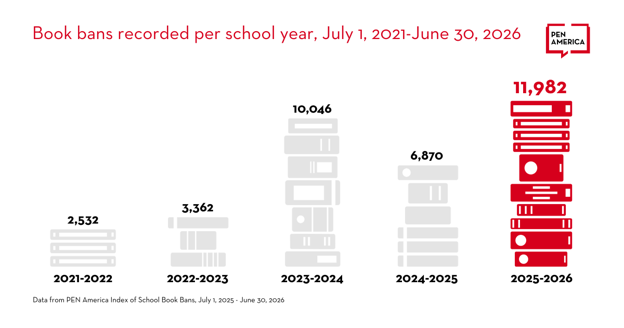
Banned Book Week 2026 - Action Alert
TAKE ACTION FOR BANNED BOOK WEEK 2026
"Protect Students' Freedom to Read in US Public Schools! Take action today and tell your representatives in Congress to oppose H.R. 7661/S. 4925
Defend the freedom to read in US public schools and tell DC politicians to stay out of district decisions that should be made at the local level! When the House and Senate return from their election recess, they could on a censorship bill that would treat high schoolers the same way as kindergarteners and prohibit spending certain federal funds on books, materials and programs while allowing others with similar content. We need your help to ensure it does not pass and that elements of this bill don't show up in other end of year legislation!
What this bill does:
H.R. 7661/S. 4925 would amend the Elementary and Secondary Education Act of 1965 by restricting the use of federal funds for schools being used for instructional materials and programming that contains “sexually oriented material” as well as “gender dysphoria and transgenderism”, the latter of which is not a real term. It will require schools to use the same standards for kindergartners as they do for high schoolers. Similar bills have passed at the state level in recent years, resulting in a chilling effect across schools and even book bans in their state. This places a huge burden on districts to ensure compliance with these vague restrictions in order to receive federal funds, and will disproportionately impact rural and under-resourced schools and overwhelmingly remove books with LGBTQ+ representation.
This bill is one of several proposals—including H.R. 2616 and H.R. 8705—that raise concerns about students' access to educational materials, federal education funding, classroom instruction, and Washington's role in determining what students can read and learn.
Why this matters:
When public schools are required to comply with vague mandates backed by federal funding penalties, districts predictably adopt the most risk-averse interpretation. The bill's limited exemptions do little to prevent this outcome, relying on restrictive lists of approved “classics” that omit many modern works and diverse authors. Books such as "The Bluest Eye" by Toni Morrison and "In The Night Kitchen" by Maurice Sendak could nevertheless be swept into disputes over compliance. By allowing Congress to dictate what belongs in public classrooms and libraries, the bill displaces local educational decision-making while signaling LGBTQ+ identities are uniquely disfavored. These compliance pressure will fall most heavily on rural and under-resourced districts and are likely to result in the disproportionate removal of books featuring LGBTQ+ representation.
What to do:
Contact your Members of Congress today and urge them to oppose S. 4925 in the Senate / H.R. 7661 in the House and other censorial proposals moving through Congress. To help you get started, we've included a sample letter asking your representative to oppose this legislation. You can personalize the message and share why the freedom to read matters to you by filling out the form below."
Cited: PEN AMERICA
https://act.pen.org/a/take-action-ssca-hr-7661-s-4925?utm_source=eaemail&ms=20261005BBWK_reportemail&utm_medium=20261005bbwk_reportemail&emci=2bf5745d-80be-f111-a6a9-000d3a56d2f7&emdi=c6136645-c9c0-f111-a6a9-000d3a56d2f7&ceid=3122848
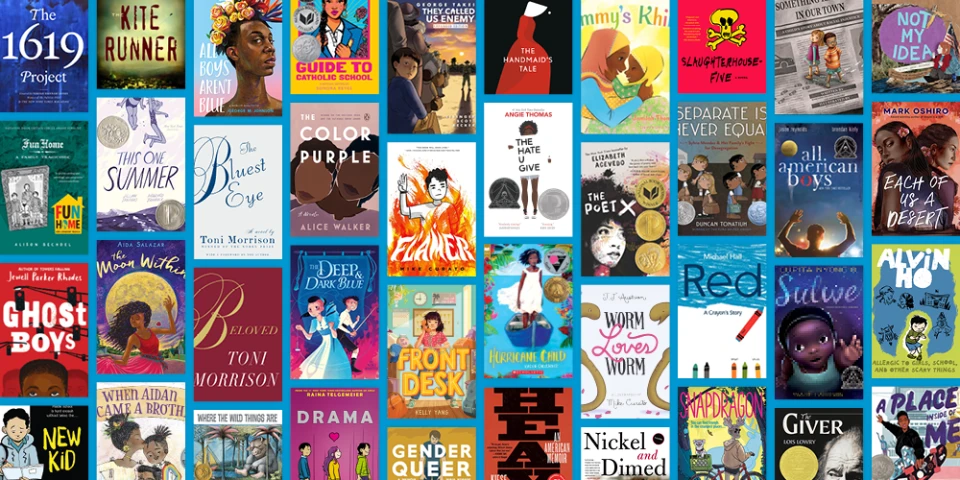
Banned Books
Historically, the banning and censorship of books is not new, but in this chaotic, troubled age of mass media and AI, both powerful tools, the shaping of human consciousness through ideological control marks a new wave of tampering with intellectual freedom. The motive? To disrupt social stability. How? By creating a nation based on ideological conformity. If intellectual freedom, the foundation of a free society, is challenged, censored, or banned, what are we left with? A flock of complacent sheep, addicted to cell phones, large-screen TVs, streaming, and social media platforms, all tracked by government surveillance. When books are stolen from students, either by removing them from library shelves or banning them from schools, censorship has taken place. This action of expurgating books, disguised as protection for our children, threatens the First Amendment principles of freedom of expression.
In the September 22, 2016, issue of Literary Pub, Amy Brady, the executive director of Orion magazine, wrote that, “Like smallpox and vinyl records, book banning is something many Americans like to think of as history,” but that is far from the truth. Since July 2021, PEN America recorded, “22,810 cases of book bans across 45 states and 451 school districts.” The normalization of book expurgation, a movement that has surged in American schools and libraries across America, erases books that are deemed controversial, books that open minds to different ideas and opinions, produce meaningful discussions, and alters the possibilities and curiosities of students to question the prevailing social, economic, political, and cultural norms of present day society. The justifications for these censorships and the banning of books include, but are not limited to, objections that the contents of the books are graphically violent, sexually explicit, morally inappropriate, politically biased, or that they promote profanity, examine critical race theory, challenge social norms, encourage drug use and homosexuality, or contain elements of magic and witchcraft that conflict with religious beliefs.
Carl Sagan, a former Cornell professor and planetary scientist, said it best:
Books are repositories of human wisdom and creativity.
What an astonishing thing a book is. One glance at it and you’re inside
another person, maybe somebody dead for thousands of years across the millennia,
an author speaking clearly and silently inside your head, directly to you.
Writing is perhaps the greatest of human inventions, binding together people who never
knew each other, citizens of distant ages, who break the shackles of time.
Books are like seeds. They can lie dormant for centuries, but they may also produce
flowers in the most unpromising soil.
Many of the most controversial works of literature are now considered to be classics, literary works that remain relevant today. These classics explore universal themes of the human condition, influence cultural and social ideology, and brilliantly demonstrate mastery of the elements of the writer’s craft. In Woman of Letters, Naomi Kanakia pointed out that it is the opinion of “Many historians that Harriet Beecher Stowe’s Uncle Tom’s Cabin was the first book in the United States to experience a ban on a national scale.” In her essay, Uncle Tom’s Cabin is the Great American Novel, she goes on to say that “The Confederacy barred the book from stores not only for its pro-abolitionist agenda, but because it aroused heated debates about slavery.” Published in 1852, its impact was immediate, as it became the most sort after novel in the 19th century, exposing the racial tensions of the times and the evils of slavery, a system that exploited and dehumanized enslaved people.
Tell a student a book is banned, and that’s the book they’ll seek. Engaging students to read, using books that deal with highly charged topics, is like a shark to blood. Through the close readings of such books as To Kill a Mockingbird by Harper Lee, Uncle Tom’s Cabin by Harriet Beecher Stowe, Beloved by Toni Morrison, or The Adventures of Huckleberry Finn by Mark Twain, a student examines critical issues surrounding racism. A poem like Allen Ginsberg’s Howl, or novels like The Bluest Eye by Toni Morrison, The Absolutely True Diary of a Part-Time Indian by Sherman Alexie, The Chocolate Wars by Robert Cormier, or Go Tell it on the Mountain by James Baldwin expose students to gender and sexuality themes. Issues that relate to government surveillance, propaganda, and violence are found in such classics as 1984 and Animal Farm by George Orwell, Brave New World by Aldous Huxley, Lord of the Flies by William Golding, Slaughterhouse Five by Kurt Vonnegut, The Handmaid’s Tale by Margaret Atwood, and The Diary of Anne Frank by Anne Frank. The opposition to such works as the Harry Potter Series by J.K. Rowling, The Scarlet Letter by Nathaniel Hawthorne, or A Portrait of the Artist as a Young Man by James Joyce stem from cultural and religious beliefs. All these skillfully written literary works have been banned at one time or another, taken out of circulation only to be replaced after guardians of the shelves voiced their opposition and fought for intellectual freedom and a student’s right to read.
The critical questions of how to approach discussions and disagreements surrounding the issues of why a book is censored or removed from a library shelf are as important as the works themselves. Learning to remain civil when there are differences in opinion is a skill that needs to be taught and practiced so that new perspectives can be explored. Given the opportunity to use literature as a vehicle to develop skills of critical thinking, meaningful engagement with a variety of controversial texts, and the opportunity to develop complex analytical, persuasive arguments is a gift each of our students deserve. As a lifelong learner and teacher, I strive to achieve excellence in the pursuit of knowledge and value the opportunity to challenge students to think critically. At the heart of every great novel there exists the opportunity to grow, exchange ideas, and understand the human condition through the lens of curiosity, empathy, and tolerance. Stand up to censorship and voice your opinion. If not now, when?
(The above image is taken from The New York Public Library)
Camp Siegfried
Once upon a time there was a summer camp on Long Island that taught Nazi ideology, a camp with no conscience or moral responsibility. Strategically located by Camp Upton’s military facility, now known as the Brookhaven National Laboratory, Camp Siegfried was one of twenty-five Nazi youth camps that spread like a plague across the United States of America. This sleeper cell, disguised as an enchanted summer get-away camp for children of German lineage and an entertainment campground where German adults could explore the rural outdoors, swim in the freshwaters of Upper Yaphank Lake, known then as Swezey’s Pond, and drink lots of Schaefer and Lowenbrau beer, was the perfect cover to prepare the fragile youth for leadership roles once the Nazis took over America. But behind this facade, a dark mission of indoctrination to embrace Aryan racial superiority could be heard on a quiet summer evening breeze as the campers gathered around the bonfires to sing the Nazi national anthem that called for the spilling of Jewish blood followed by the Hitler salute and the shoutout of “Sieg Heil.”
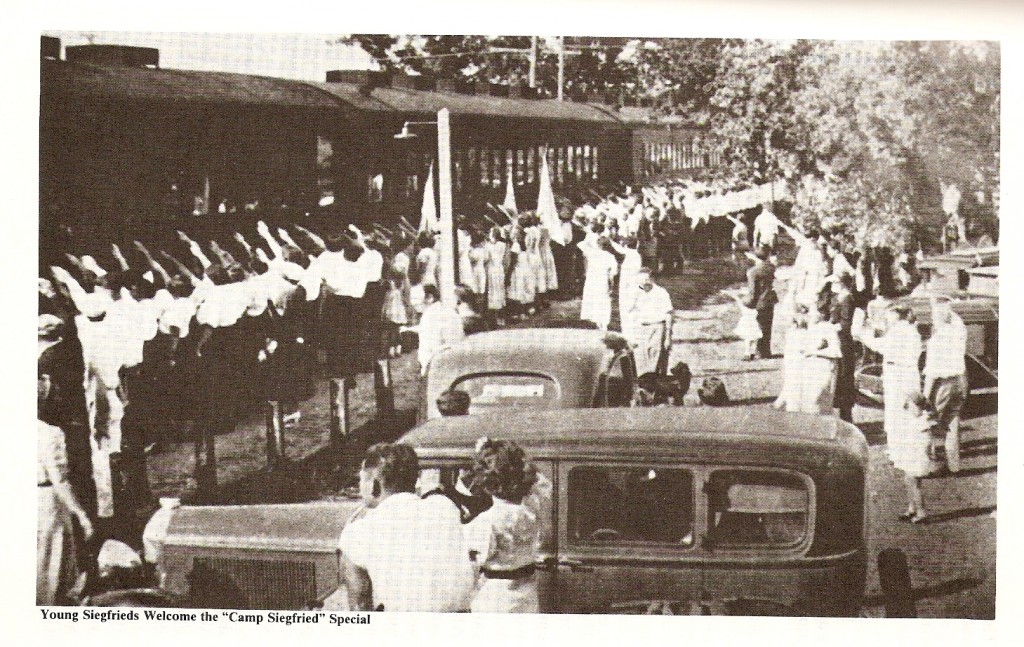
Camp Siegfried opened its doors in 1935, under the leadership of Kritz Kuhn, a naturalized citizen of the United States, who was proud to be known as the American Fuehrer and the head of the German American Bund. His leadership encouraged the grooming of Aryan children, under the fluttering flags of the German swastika, to dress as Hitler’s youth as they physically trained, learned outdoor survival skills, and achieved proficiency using firearms. For the thousands of adults that attended weekend rallies, the draw was a reminder of the summer lodgings they’d left behind in the fatherland. On any given summer weekend, 40,000 visitors would arrive to drink sometimes up to 10,000 gallons of beer, sing om-pa-pa songs, and partake in the festivities. Some would drive to the camp while others would travel from Penn Station on the “Siegfried Special.” Upon the train’s arrival at the Yaphank railroad depot, camp youth members, dressed in their Hitler youth uniforms, would greet the visitors with the Nazi salute. Together, they’d parade through the streets of Yaphank, a small farming town in Suffolk County, until they reached the entrance to the camp. To protect the marchers, Kuhn organized hundreds of storm troopers to watch over them as the loudspeakers poured forth antisemitic speeches. By 1937, however, suspicions grew within the community as local, state, and federal governments began to question the dark goings-on at the camp.
In 1938, Marvin Miller, a local history teacher from Commack High School, published a novel about Camp Siegfried entitled Wunderlich’s Salute in which he noted that “In the 1930s, one of every seven inhabitants in Suffolk County belonged to the Ku Klux Klan, and were especially well represented in Yaphank.” The town was a perfect wooded lakefront environment to breed the cancer of hate.
Arnie Bernstein’s novel Swastika Nation pointed out that the hidden truth behind this wholesome haven was “the emotional, intellectual, sexual, and physical abuse of the children.” Only German was allowed to be spoken at the camp. If anyone by mistake spoke English, they were punished. Goosestepping was practiced daily as was the forced studies of German culture which was followed by rigorous written tests. Mark Furr, in his article entitled “Camp Siegfried: Just Another Regular Long Island Summer Camp-with a Nazi Twist,” acknowledged that “Campers were woken during the middle of the night, forced to strap on thirty-pound packs and hike through bramble-covered trails, often getting cut up as they marched along.” The more scratched up they got the more praise they’d received. Forced child labor to construct camp facilities was employed by Bund leaders to avoid paying union members they believed were Communists and Jews.
In addition to Nazi indoctrination, Kuhn, like Hitler, desired to breed more Aryans. This was accomplished through dissemination of propaganda, the allowance of teen consumption of beer, and the encouragement of teen boys to be sexually active with teen girls, many of which left summer camp pregnant. Accounts emerged years after the closure of the camp that male counselors had forced themselves on female campers against their will, a practice that was not frowned upon by camp directors. One of the youth leaders, Tillie Koch, was so distraught about the immorality taking place at Camp Siegfried, that she chose to stand outside of the girls’ tent to protect the girls from sexual harassment. Over several days of driving, cold rains, she contracted pneumonia and died. Her death could have been avoided if a doctor had been called, but Bund leaders felt that she’d been a threat and hadn’t demonstrated the loyalty and tenacity a German should exhibit.
On February 20, 1939, 20,000 German Americans marched through the streets of Manhattan, waving German swastika flags alongside American flags. They gathered at a rally in Madison Square Garden where Fritz Kuhn orchestrated the largest Nazi assembly in America. Shocked by the display, New York District Attorney Thomas Dewey went after Kuhn on tax evasion charges, accusing and then proving that he’d been skimming money from the Bund and from the coffers of Camp Siegfried. In August of the same year, an investigation of un-American propaganda activities in the United States took place. Hearings, organized by Representative Samuel Dickson, a Democrat from New York, were held in the House of Representatives in Washington, D.C.; the presiding chairman was Hon. Martin Dies. During this investigation, testimony was heard from key witnesses that were concerned about subversive, Communist activities. Included in those hearings were interviews with several key witnesses, two of which were the Bund leader, Fritz Kuhn, and Helen Vooros, a Brooklyn Bund youth leader and friend of the deceased, Tilly Koch. Helen met Tillie during a Bund meeting in Brooklyn. Over the course of their friendship Tillie had shared with Helen her concerns about immorality taking place at Camp Siegfried. Helen, age 19, bravely agreed to be interviewed by the House committee where she confessed that on a trip to Germany, paid for by the German American Bund, she’d been sexually assaulted by a Bund leader. When asked at the hearing if this practice of allowing boys and girls to follow their instincts was moral, she confessed that she was taught that breeding more Aryans inspired purity for their race. When asked why she left the movement, Helen shared that she was disgusted by camp conduct and needed to stand up to the horrific teachings of the Bund. At one point in her testimony Helen shared:
They tell us that we are pure Aryans, and that we are not to mingle with any other race because they say that would be the most disgusting thing that could happen. They say that our race would be ruined…Small children, from 8 to 12 years old, are given books published by Julius Streicher, an antisemitic German publicist. They are the kind of books that children would get in kindergarten. They would have pictures of Jews with blood dripping fingers, and under the picture there would be rhymes. We were told that later we could have children, and that our children were to be in favor of the same government…that is, the German Nazi theory of government, because it was the only way to get along. There were three groups. The other two groups were ages 12 to 14, and 14 to 18. The oldest groups were taught to spread propaganda…We were forced to read Hitler’s Mein Kampf and books by Julius Streicher…Girls’ main purpose was to birth more Aryans…Boys to be soldiers.
The final blow to Camp Siegfried took place in November of 1939 when Judge Gustav Neuss, a Justice of the Peace in Yaphank, who’d consistently opposed the Bund’s presence on Long Island, requested the Brookhaven Town’s Alcoholic Beverage Board to rescind Camp Siegfried’s liquor license. The camp never recovered from the board’s action.
Fritz Kuhn was deported after the war, imprisoned, and died in Germany in 1951. Julius Streicher, who’d provided fodder for the children of these youth camps, ended up as a convicted war criminal. He was hanged in Nuremberg on October 16, 1946.
The spread of hate that flourished in Camp Siegfried is captured in the lyrics of Rogers and Hammerstein’s song, “You’ve got to be Carefully Taught:”
You’ve got to be taught to hate and fear,
You’ve got to be taught from year to year,
It’s got to be drummed in your dear little ear-
You’ve got to be carefully taught!
You’ve got to be taught to be afraid
Of people whose eyes are oddly made,
And people whose skin is a different shade-
You’ve got to be carefully taught!
You’ve got to be taught before it’s too late,
Before you are six or seven or eight,
To hate all the people your relatives hate-
You’ve got to be carefully taught!
This glimpse into an unknown 1930s page in Long Island history, reveals the dark dangers of extremism, prejudice, and hatred that still echoes throughout our country and around the world. The power of propaganda and the spewing of hatred for specific groups of people is a reminder that we must never be complacent and never look away.
(The picture above is taken at the Long Island Railroad in Yaphank Station where visitors were greeted by Bundists campers, courtesy of Marvin Miller’s Wunderlich’s Salute)
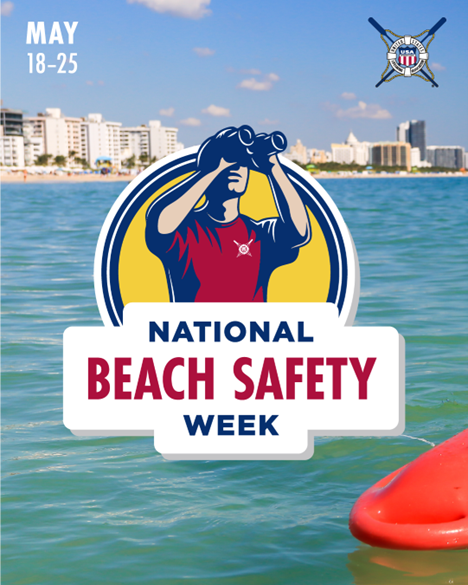
NATIONAL BEACH SAFETY WEEK 2026
Each year, the USLA celebrates National Beach Safety Week in an effort to remind beachgoers to use caution in the aquatic environment.
National Beach Safety Week begins May 18th, the Monday before Memorial Day, and ends on Memorial Day, May 25th.
This year, commemorate National Beach Safety Week by downloading and sharing the official social media assets at USLA.org/safety-week.
USLA’s Top Ten Beach and Water Safety Tips
Swim near a lifeguard
Learn to Swim
Learn rip current safety
Never swim alone
Designate a water watcher
Alcohol and water don’t mix
Feet first water entry
Life jackets save lives
Observe signs and flags
Beat the heat and block the sun
General Information on Drowning
Drowning is the fifth leading cause of accidental death in the United States. Among those ages 1 to14, drowning is the second-leading cause of unintentional injury-related deaths behind motor vehicle crashes. Drowning is responsible for more deaths among children ages 1 to 4 than any other cause except congenital anomalies (birth defects).
Fatal drowning is only the tip of the iceberg for aquatic injury. For every child who dies from drowning, another five receive emergency department care for nonfatal submersion injuries. Some of these never fully recover.
Males are almost 80% of the fatal drowning victims. For boating related drowning deaths, the percent is even higher.
(The foregoing data came from the Center for Disease Control and Prevention)
Guide for Safety Tips
Swim Near a Lifeguard: Reports from lifeguard agencies nationwide consistently show that the odds of a swimmer fatally drowning at a beach protected by USLA affiliated lifeguards is 1 in 18 million (.0000055%). While swimmers must take some responsibility for their own safety, lifeguards are trained to recognize hazardous conditions, advise swimmers how to stay safe, respond to emergencies, and provide medical care for those in need. Lifeguards work to prevent drowning and injury through constant vigilance and interaction with the swimming public. When you arrive at the beach, check with lifeguards for designated swim areas and their safety advice.
Learn to Swim: Every day, about ten people die from unintentional drowning. Your best insurance against drowning is learning to swim. Participation in formal swim lessons can reduce the likelihood of childhood drowning death by 88%. Learning to swim means much more than learning strokes; it is learning water survival skills, water safety, and developing comfort and confidence in the water. Water safety is about having an educated respect for the water, including an understanding of the layers of protection needed to keep ourselves and our loved ones safer when in, on, and around water. If you cannot master the complete technique, at least learn to tread water so you can yell or wave your arms for attention should you find yourself in difficulty. When entering the open water remember: Never overestimate your swimming ability; don’t rely on inner tubes, plastic air mattresses, or other inflatable toys; and don’t float where you can’t swim.
When in doubt, don’t go out!
Learn Rip Current Safety: Rip currents are channelized currents of water flowing away from shore at surf beaches that typically form at breaks in sandbars and near structures such as piers and rock groins. The USLA has found that more than 80% of rescues by USLA affiliated lifeguards at ocean beaches are caused by rip currents. If you are caught in a rip current, relax, rip currents don't pull you under. Don’t swim against the current. You may be able to escape by swimming out of the current in a direction following the shoreline, or toward breaking waves, then at an angle toward the beach. Alternatively, you may be able to escape by floating or treading water if the current circulates back toward shore. If you feel you will be unable to reach shore, draw attention to yourself. If you need help, yell and wave for assistance.
To help someone else caught in a rip current: Do not become a victim while trying to help someone else. Many people have died trying to rescue rip current victims. Instead, get help from a lifeguard. If a lifeguard is not present, call 9-1-1, while directing the victim to swim along the shoreline to escape. If possible, throw the rip current victim something that floats.
Never Swim Alone: Many fatal drowning deaths involve swimmers out in the water alone. Always swim with a buddy so that if one swimmer has a problem, the other can provide immediate assistance while signaling for assistance to others on the beach, including lifeguards
Designate a Water Watcher: Supervision could save a life. Watch all children and adolescents swimming or playing in or around water, even if they know how to swim. Young children or inexperienced swimmers need to be within arm’s reach of an adult at all times. When enjoying the beach with a group, make sure to designate a “Water Watcher” whose sole responsibility is to keep an eye on those in the water at all times. This is not a substitute for a lifeguard. Choose a lifeguard protected area and designate a "Water Watcher."
Alcohol and Water Don't Mix: Avoid water recreation when under the influence of alcohol or drugs. Alcohol influences balance, coordination, and judgment, and its effects are heightened by sun exposure and heat.
Feet First Water Entry: Life altering injuries from spinal damage, including paraplegia, occur every year on our nation’s beaches. The most common cause is diving headfirst and striking the bottom. In addition, surfing, bodyboarding, and bodysurfing can lead to spinal injuries if precautions are not taken to avoid striking the bottom headfirst. Check for depth and obstructions before entering the water, then go in feet first. Use caution when riding waves, always extending arms ahead of the body.
Life Jackets Save Lives: Children and non-swimmers should wear a U.S. Coast Guard-approved, properly fitted life jacket when in or around the water and at the beach. Wearing a life jacket is the simplest life-saving strategy for recreational boating, paddling, or towed water sports. Some 77% of fatalities associated with boating accidents are from drowning, and 84% of those were not wearing life jackets. Most involve people who never expected to end up in the water, but fell overboard or ended up in the water when the boat sank. All children age 12 and under must wear a USCG approved lifejacket when on a moving watercraft.
Observe Signs and Flags: It sometimes seems as though there are too many signs, but the ones at the beach are intended to help keep you safe. Read the signs upon arrival to learn about hazards specific to that beach and local regulations. Also, look for flags flown by lifeguards to advise of hazards and temporary restrictions in effect. The best bet is to check in with the lifeguard on duty whenever a warning flag is flown.
Beat the Heat and Block the Sun: While everyone loves a sunny day, exposure to the heat and sun affects the body in multiple ways. Immediate effects include: Painful sunburn, heat exhaustion, heat cramps, and potentially fatal heat stroke. Long term effects include: Skin cancer and premature aging. To protect yourself: Drink plenty of water, avoid alcohol, take breaks inside during the hottest parts of the day, use "broad spectrum” sunscreen rated from 15 to 50 SPF and reapply throughout the day, use UPF protective clothing that covers the skin, and protect the eyes by wearing sunglasses that block 100% of UV rays. Lifeguards are well trained to deal with heat related emergencies, so if feeling ill request assistance.
ADVICE FOR WRITERS
Mastering the art of writing a compelling story, whether for a novel, a short story, a stage play, or a screenplay, requires a writer to focus on the elements of the writer’s craft. The most important aspects of the art and craft of writing include: a solid premise, characters with thematic character arcs, dialogue, plot/structure, setting, tone, mood, and point of view.
Characters are the soul of any story. They must have clear goals and motivations, a unique voice and point of view, with flaws and strengths. Thematic character arcs, where a character changes over the course of the story, should align with the story’s major turning points. By establishing a starting point for each main character, a writer can choose the key moments of change and show a clear transformation by the end. Each character should have a distinct voice that remains the same throughout the story.
Dialogue serves to propel a plot forward, reveal something about a character, and through subtext, where the unsaid is as important as what is being said, create conflict or tension. It’s important to avoid “on the nose” dialogue to effectively create multiple layers of meaning.
A well-structured story is essential to keep the audience or reader engaged, thus ensuring a compelling narrative arc. Establishing place, time and mood at the beginning of a narrative reveals what the story is about and whose story it is. The use of plot points is key to driving a story forward. During the set-up, the inciting incident sets the story in motion. At the first plot point, the protagonist commits to the main conflict. The midpoint of the story reveals a major shift or revelation that raises the stakes higher. The second plot point is the final push towards the climax, the highest point of tension. This is followed by the resolution and the transformation of the protagonist(s).
A clear central theme woven into character arcs and plot developments should emerge through events and dialogue, reinforced using symbolism and motifs. At the beginning of a captivating story there is a hook that grabs the reader’s or audience’s attention. What the protagonist wants, both internally and externally, and what roadblocks stop the protagonist from achieving these wants, needs or goals create conflict and tension. As the stakes get higher, though showing, not telling, the hero’s journey arrives at a realization or destination, changed from the character who was introduced in the set-up of the story.
Every writer has a unique story that deserves to be told. As Janet Burroway states in her novel, Writing Fiction – A Guide to Narrative Craft, “ideas are not new, but the form in which ideas are expressed is constantly renewed, and new forms give life to what used to be called the eternal verities. An innovative writer tries to forge, and those who follow try to perfect, forms that so fuse with meaning that form itself expresses.”

Personalized 1-to-1 Tutoring Offered in East Hampton, New York
October is Dyslexia Awareness Month, a perfect time to spotlight evidence-based instruction and expand access for students who need explicit, multi-sensory, systematic support that focuses on phonemic awarenness, phonics, spelling, fluency, vocabulary, and comprehension. Dyslexia, a neurological, inherited condition caused by a different wiring of the brain, has no relationsip to intelligence, but rather a condition where reading and writing become difficult to learn. It's important to emphasize that illiteracy isn't about ignorant, lazy children, but rather about teachers using flawed reading methodologies that don't work.
In Newsday's editorial dated Thursday, September 25, 2025, members of the editorial board addressed the idea that our schools need to get back to teaching basics in order to boost reading. The editorial opened with the following: "Kids' reading scores across the country and in New York remain chronically and stubbornly low. A recent national report shows high school seniors are reading at lower levels than at any time since at least 1992. A little more than half of New York students in grades 3-8 aren't reading proficiently. These reading proficiency rates are disturbing and should be a major concern to all. We have to get this right. A kid in a Long Island school who can't read is unconscionable."
In September 2022, The East Hampton Star reported that “pandemic-era learning setbacks had hobbled reading and math progress” both nationally and locally. Unfortunately, the most recent reading test results in the East Hampton School District, school year 2024-2025, have not accomplished the district’s focus on returning to academic excellence with 52% of their elementary students unable to meet or exceed the reading proficiency level and 41% of their middle school students unable to meet or exceed the reading proficiency level. As a lifelong learner and educator, I believe that reading and writing are necessary skills for living a productive life with dignity and respect because reading is a superpower that represents freedom to achieve your greatest potential and live a life you’re meant to live.
Our public schools need to focus on raising confident readers who learn to love reading. In American Educator, a journal of educational equity, research, and ideas, the editors noted that “there is a reciprocal relationship between reading and writing. Both decoding (sounding words out) and encoding (spelling words) rely on the same foundational knowledge,” yet the teaching of writing in relationship to reading has been eliminated in most public-school settings. Statistics from the U.S. Department of Education revealed that 20% of all public-school populations struggle with reading. That’s 1 in 5 kids that can’t read on grade level or can’t read at all. That is both statistically significant and an educational crime.
If you find your child falls in that group of students who are academically failing due to an inability to read on grade level, and who are not receiving structured literacy classes five days a week, perhaps it’s time to consider a successful alternative here in the village of East Hampton: Personalized one-to-one structured literacy tutoring by Helene Forst, a certified, Harvard educated reading specialist, who can offer reading and writing instruction grounded in the Science of Reading that is proven to work with students with reading challenges.
A Tutor Can Make All the Difference
Does your child have Dyslexia or a Language-Based Disability?
Is your child failing in school?
Whether a child needs a helping hand to develop stronger study habits, sharpen his or her academic performance, or reduce anxiety and stress due to repeated academic failures, a tutor can make all the difference.
Dyslexia, a neurological, inherited condition caused by a different wiring of the brain, is not something a person can outgrow. It’s important to understand that dyslexia has no relationship to intelligence, but rather a condition where reading and writing become difficult to learn. Illiteracy isn’t about ignorant, brainless, lazy children. It’s about teachers using flawed reading methodologies that don’t work.
Reading is a superpower we all deserve.
The National Literacy Trust defines literacy as “the ability to read, write, speak and listen in a way that lets us communicate effectively and make sense of the world.” Being able to read and write, necessary skills for living a productive life with dignity and respect, represent freedom to live a life you’re meant to live.
Today, our country’s educational institutions are in crisis mode. Even before the pandemic, statistics from the U.S. Department of Education revealed that 20% of all public-school populations struggle with reading. That’s 1 in 5 kids that can’t read on grade level or can’t read at all. That is both statistically significant and an educational crime.
For a long time, universities and colleges ignored the cognitive science behind reading acquisition, offering instead flawed reading methodologies that didn’t work. It’s time our institutions of higher learning changed how they teach reading acquisition because illiteracy is a pipeline to prison. Almost 50% of the U.S. prison populations struggle with reading; 85% of juveniles in the court system are functionally illiterate; and two-thirds of kids who can’t read by the end of 4th grade will end up in jail or on welfare.
If your child struggles in school, personalized tutoring by a professional who understands the importance of using structured literacy in a direct, explicit, multi-sensory, sequential approach can reverse the repeated failures and traumas experienced in school, with the end goal of creating independent, self-confident learners.
It's never too late to seek a tutor who can change the trajectory of your child’s educational experience from low-self-esteem and failure to self-confidence and success in being an independent learner.
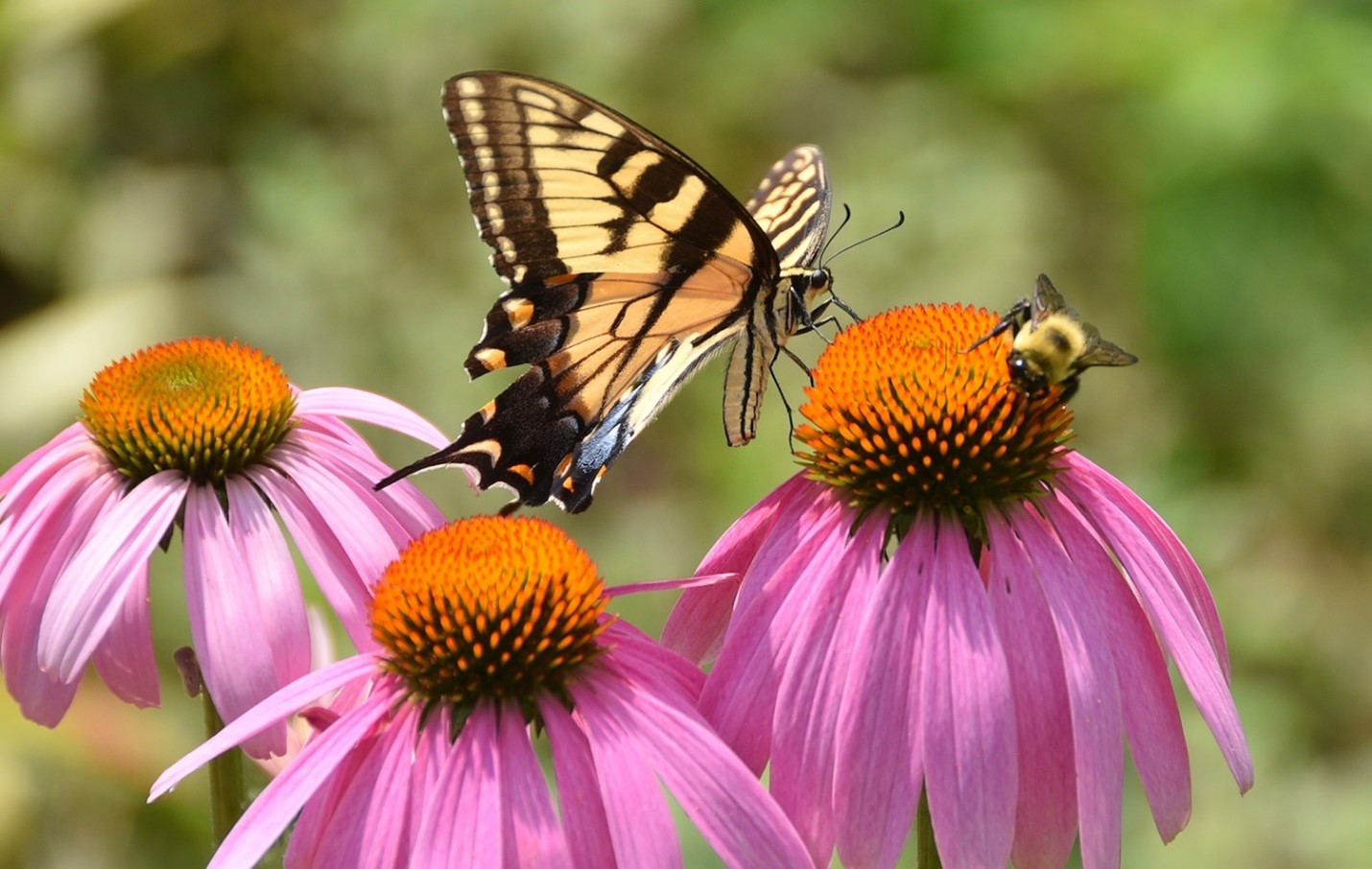
If You Plant Them, They Shall Come!
(Photo taken from Flowering Magazine Online Site)
Habitat loss is one of the greatest dangers to bees today. Overdevelopment of land, the high use of pesticides and toxic chemicals in our environment, diseases, and parasites have threatened the pollinators that provide us with most of our food. Creating habitats in our landscapes for native pollinators like "bees, flies, wasps, insects, moths, butterflies, beetles, bats, birds, and several mammals matter because without these pollinators, our fruits, vegetables, herbs, chocolates, coffees, nuts, and spices" will vanish off the face of the earth.
"There are over 20,000 bee species globally, four-thousands" of them beating their tiny wings in the United States alone, but their populations are dwindling at alarming rates. Anybody can create a bee habitat in a backyard garden or a flowerpot. By feeding the bees with "nectar and pollen rich" native perennials that bloom early in the season, followed by mid and late season blooms and avoiding the use of pesticides and toxic chemicals we can boost these dwindling pollinator populations. In the northeast, early blooming nectar and pollen rich flowers are Digitalis, Echinacea, Spiderwort, and Blue Wild Indigo. Mid-season blooming perennials are Milkweed, Wild Bergamot, Hyssop, Mountain Mint, and Blazing Star. These flowering plants can be followed by the late-season blooms of Goldenrod, Green-headed Coneflower, Yarrow, and New England Aster.
It’s never too late to plant your pollinator garden! If you plant it, they shall come!
Bibliography
- Flowering Magazine Online. Susan Hall Mahon. 2022. <https://flowermag.com/how-to-plant-a-pollinator-garden/>
- Northeast Pollinator Online. Ed. Jane Sorenson. 15 August 2023. <https://www.northeastpollinator.com/>
- The Spruce Online. Les Engles. 28 February 2022. < https://www.thespruce.com/all-about-pollinator-gardens-5195334>
- U.S. Department of Agriculture Online. Brianna Randall. 22 June 2020. <https://www.farmers.gov/blog/value-birds-and-bees#:~:text=More%20than%2080%20percent%20of,with%20the%20help%20of%20pollinators>

“The Seventh Generation”
“In our deliberation, we must consider the impact of our decisions on the next generations.” - From the Great Law of the Iroquois Confederacy
The people who made up the Iroquois Confederacy lived in the northern region of North America, specifically in the state of New York. The Six Nations were comprised of the Mohawks, the Oneidas, the Onondagas, the Cayugas, the Senecas, and the Tuscaroras. These people “created the oldest living participatory Democracy on Earth.”
Before the traditional Iroquois began a council meeting, they publicly declared, “In every deliberation we must consider the impact on the seventh generation…. even if it requires having skin as thick as the bark of a tree.” For the Iroquois, the generational make-up of their counsel embraced a far-reaching relationship between governmental leadership and respect for the environment. The rights of future generations never became an issue of policy because it was, instead, the very basis of their policies.
Conservation was the foundation upon which their culture was built. The first three sections of the Great Law begins as follows: “I (the Peacemaker), Hiawatha, and the Sachems have planted a tree of Peace….Under the shade of this great tree we have prepared seats for you….Should any nation or individual outside the Sachems adopt the Great Law upon learning them or by tracing their roots to the Great Tree….They will be made welcome to take shelter under the branches of this tree….We have tied ourselves together in one head, body, one spirit and one soul to settle all matter as one. We shall work, counsel, and confirm together for the future of coming generations.”
The people of the Iroquois Nation had been careful stewards of the Earth. Nowhere in that vast territory, the territory that is now known as New York State, was there a single polluted river, hazardous waste site, or open landfill. It’s time for people to adopt and live the ways of The Great Law, the Law of the Iroquois Nation.
MAKE A DIFFERENCE TODAY!
BE RESPONSIBLE. GET INVOLVED. BE PART OF THE SOLUTION!
Saving the planet is a joint effort. One of the most important steps in healing the planet is to learn about the environment. Then, and only then, will you be able to change the way you live on the Earth. Then, and only then, will you be equipped to influence your elected officials.
To bring about change, it’s necessary to contact government representatives and make your opinions known. As your delegate, they need to hear from you. How else will they be aware of their constituents’ feelings about different issues relating to the environment?
Support local and world-based environmental organizations whose goals are like yours. And, finally, be a “green consumer.” Buy recycled products, avoid items that use excessive packaging, and boycott products that harm the environment. Here are several ways you can become eco-friendly and start making lifestyle changes that can make a difference:
Save Energy: Remember to turn off lights when you leave a room, start using energy efficient light bulbs, turn off any appliances or machinery that are not in use, unplug your gadgets, use energy efficient appliances, adjust your thermostats, make small home improvements to better insulate your home, and support renewable energy.
Reduce, Reuse, Recycle: Recycle paper, aluminum, glass, and paper.
Use recycled products. Look for the recycling symbol on products you buy. Purchase bags that can be used repeatedly and avoid using plastic bags. Don’t litter. Start recycling in your home, school, and business. Boycott products that do not break down in the environment. Don’t buy foods that come in Styrofoam containers. Recycling reduces energy use. Conserve water at home. Check for water leaks. Drink less bottled water. Reduce household pollutants. Water plants and lawns in the evening.
Eat Healthy: Buy or grow organic fruits and vegetables. Buy products that are in season. Avoid foods that have been exposed to toxic pesticides, herbicides, and fungicides. Avoid eating species that have been overexploited. Minimize your food waste. Make low-impact food choices. Eat less junk food, such as sugary foods and sodas. Remember, you are what you eat.
Save the Forests: Boycott any wood products that contribute to the destruction of a tropical rainforest. Plant a tree - they absorb carbon dioxide and give off oxygen.
Don’t Waste Water: Water is a precious commodity. Don’t let the water run while you brush your teeth or wash your dishes. Flush the toilet only when it’s necessary. There is a saying that encourages water conservation: “If it’s yellow, let it mellow. If it’s brown, flush it down.”
What We Buy Affects Biodiversity: Buy what you need. Buy products that are made locally; less energy is used to transport these products. Choose products with minimal packaging. Avoid products that are made from endangered species. Look for durable products that will last for a long time. Buy products that have a low impact on the environment. Your consumer choices can make a difference to biodiversity conservation.
“Think globally! Act Locally!”
WHAT'S IN YOUR LAUNDRY DETERGENT?
The Poison in Your Laundry
In February of 2018, I posted an article I'd written for "Guestwords" in The East Hampton Star. As I walked through the lanes in East Hampton Village this morning, I couldn't get over all the toxic fragrances filling the streets during this pandemic. I hoped that the reason for it was due to the unavailability of so many healthy, free and clear, eco-friendly products, but I couldn't be sure, so I decided to post the article once again. Earth Day 2020 is Wednesday, April 22nd. Purchasing one of these healthier products could be one simple thing you could do to help eliminate pollution in the air, the soil, and the water.
Have you ever wondered what’s in that bottle of detergent or softener you pour into your washing machine, or on that fragrant dryer sheet you throw into your dryer? Well, it’s time you did, because the truth about your laundry products might make you change your laundry routine forever.
Many of the common laundry detergents, softeners, and dryer sheets that sit on our supermarket shelves, like Procter & Gamble’s popular original Tide, and fragrance-free Tide Free and Gentle, contain high levels of 1,4-dioxane, a carcinogenic pollutant. Lesser amounts of the same contaminant were detected in Bounce, both original and Free and Gentle. It’s no wonder that this carcinogenic contaminant has been found in 39 Long Island water districts, many of them in the Town of East Hampton. It’s a shame and a disgrace that Procter & Gamble has consciously chosen not to reformulate these toxic products that people use every day.
Neither New York State nor the federal Environmental Protection Agency regulates dioxane in drinking water. According to Citizens Campaign for the Environment, “Once this chemical flows down your drain, it travels into our groundwater through our septic tanks and cesspools,” before flowing “outward into our surface waters or downward into our aquifers, which are the sole source of Long Island’s drinking water. Removing it is a difficult problem once it hits the groundwater and soil.”
Not only is this toxic chemical found in laundry detergents and soaps, it’s also found in shampoos and body washes. Citizens Campaign for the Environment reports that “approximately 46 percent of personal care products, including detergents, dishwashing soaps, shampoos, cosmetics, deodorants, and body lotions, contain 1,4-dioxane.” In addition, dryer sheets, a common part of many people’s laundry routine, are laden with a multitude of toxic ingredients.
Why would you expose your skin to such dangerous contaminants? If you look on the box of those dryer sheets, you’ll discover that none of the toxic ingredients are listed. Why not, you ask? Well, the current U.S. Consumer Product Safety Commission doesn’t require it.
Dr. Anne Steinemann, an expert on pollutants and human health at the University of Melbourne in Australia, has studied the chemicals that discharge from people’s dryer vents into the air and then into our lungs and found that “there are seven dangerous air contaminants and 25 volatile organic compounds that are emitted into the air from fabric softeners and dryer sheets, such as acetaldehyde and benzene. These contaminants are not safe at any level; they are the same pollutants that are emitted from the tailpipes of automobiles. Acetaldehyde is a common ingredient used in fake fragrance blends. It’s potentially carcinogenic to humans and adversely impacts the kidneys and nervous and respiratory systems.”
Just take a bike ride or a walk through any neighborhood, as I did this morning, and you can smell these noxious chemicals being blown out of your neighbors’ dryer vents.
In 2016, Dr. Steinemann conducted a study that found that “12.5 percent of people blamed scented laundry products spewing from dryer vents for health issues. These included migraines, respiratory issues, skin issues, asthma attacks, and gastrointestinal symptoms.” The scary thing is that Procter & Gamble, the company responsible for most of these products, touts them as being “ideal for newborns and babies.”
What can you do? Stop buying these contaminated products. Each of us as individuals, working together as a community of concerned citizens, can make a difference. All you need to do is say no to the use of these products and purchase eco-friendly detergents instead. There are several companies, such as Seventh Generation, that have come out with healthy, effective cleaning and laundry products.
In addition, the not-for-profit organization Earthjustice recently asked residents of New York to contact Gov. Andrew Cuomo because “he promised to make protecting the public and the environment from chemical contamination a top priority.” I realize that our governor has had his hands full as he works tirelessly for New Yorkers during this social distancing, sheltering pandemic, but for your health, and the health of the environment, “tell Governor Cuomo to require disclosure of all cleaning product ingredients — not just those products the manufacturers add intentionally.”
We should be holding the governor to his promise. Let him know who you are, where you live, and that you’d like transparency for everything that’s being put into cleaning products, shampoos, and body washes that are being sold in New York State.
Remember, it’s never too late to take a stand for your health and for the health of our environment.
Helene Forst is a teacher, environmental activist, and the author of two young-adult novels, “The Journey of Hannah Woods” and “Stoked — 1969.” She lives in East Hampton.
EARTH DAY 2020
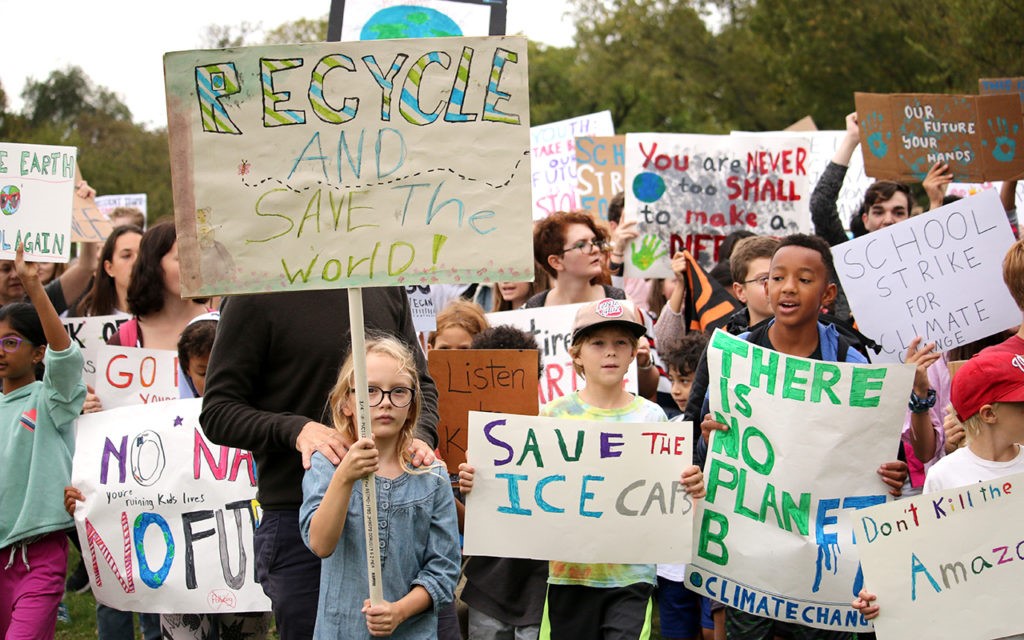
The first Earth Day took place fifty years ago on April 22nd, 1970, launching a wave of action, including the passage of landmark environmental laws in the United States, including: The Clean Air Act, The Clean Water and Endangered Species Acts, and the creation of the Environmental Protection Agency (EPA). It mobilized millions of Americans for the protection of the planet. On that day, 20 million Americans, that's 10% of the population of the United states at that time, took to the streets, college campuses, and hundreds of cities to protest environmental ignorance and demand a new way forward for our planet.
Internationally, Earth Day continues to hold major significance when in 2016 the United Nations chose Earth Day as the day when the historic Paris Agreement on climate change was signed into force.
Thanks to heroic actions around the world during this global pandemic, we will overcome and recover from the Coronavirus. Life will return to a new normal, but we must not allow the return to business as usual because our planet, our future, depends on it.

The theme for Earth Day 2020 is climate action, because climate change represents the biggest challenge to the future of humanity and the life-support systems that make our world habitable.
There is so much we can all do. The world needs all of us, all our actions to help protect and restore our planet, making every day Earth Day.
Despite decades of environmental progress, we still find ourselves facing a tipping point of global environmental challenges, from plastic pollution, biodiversity, air, soil, and water pollution, and rising seas.
No matter where you are, you can make a difference, building a new generation of environmental activists, right from your home while social distancing and protecting your community. Here are a few ideas where you can exercise your responsibility to act for the environment.
For Earth Day's 50th anniversary, use these ideas to inspire meaningful actions, actions that can and should be turned into habits that last beyond April 22nd, for we must remember that Every Day Is Earth Day!
Plastic Pollution - Plastics have become a huge part of our daily lives, but you can make a difference by changing what you buy and how you get rid of plastics. Walk around your home and count how many plastic containers, bags, and bottles are in your kitchen and bathroom. Research more sustainable packaging for the next time you order online or grocery shop. When you order takeout from a restaurant, ask them to skip the plastic utensils. Every little bit helps.
Food and Climate - Learn about the impacts of your food choices and research cooking recipes that are plant-based alternatives. Live stream a plant-based cooking class, or how to preserve through canning, pickling, drying, and freezing to enjoy fruits and vegetables year-round to minimize your food waste. If you are able, volunteer or donate to assist local food pantries in your community. We can fight climate change with the change in our diets.
Artists in the Environment - Art is a powerful tool to communicate messages, trigger emotions, and inspire action. Perhaps you can create an art project that will inspire people to realize the climate challenges we are all facing. Some suggestions: Gather nature items from outside like pinecones and leaves, acorns or pressed spring flowers and design an art project out of them. What animals can you create out of the things you find? Perhaps you could draw or sketch or paint a picture of what a sustainable future might look like to you. Writing a creative story about what that world might look like to you can add another dimension to your picture.You might repurpose materials from around your home, making new items like jewelry or plant holders. The sky is the limit!



Protecting Our Species - Watch an environmental documentary and research ways to protect endangered animals in their natural habitats, or research what pollinators are native to your area and what plants they rely on. Perhaps you could design a pollinator garden this spring for your yard. It's never too late to learn about the impacts of biodiversity loss and how to help mitigate its negative impacts.

APRIL'S "SUPER PINK MOON"
April Full Moon 2020: "Super Pink Moon," the biggest of the year, rises Tuesday

The full moon of April 2020, called the "Super Pink Moon," a cosmic distraction from COVID-19, will occur on Tuesday, April 7th. Skywatchers in the U.S. can see the "Super Pink Moon" rise into the evening sky as the sun sets on Tuesday. For those who don't know, a "supermoon" is a full moon that appears slightly larger than average. In New York City, moonrise is at 7:05 p.m. local time on the evening of April 7th, and moonset is the next morning at 7:05 a.m.
The Pink Moon, which really isn't pink, symbolizes the sprouting of seed and the explosion of pink flowers – the moss pink, or the wild ground phlox, one of the first flowers to bloom with the arrival of the spring. According to The Old Farmer's Almanac, it can also appear to be red-orange due to the composition of Earth's atmosphere and the angle at which it is viewed. April's Full Moon has also been called the Sprouting Grass Moon, the Egg Moon, and the Fish Moon.
The Native American Full Moon names, relating to nature, the seasons, hunting, fishing, and farming, date back to when Native Americans lived in today’s northern and eastern United States. They reflect the harsh climate of North America and the lifestyle traditions of its first people.
The Algonquin Full Moon names, and variations used by other Native American tribes, are descriptive of nature’s seasons and gifts. The indigenous people kept track of the seasons by giving distinctive names to each recurring Full Moon.
For the Abenaki, the April Full Moon was the “Sugar Maker Moon.” For the Arapaho, it was called the “Ice Breaking In The River Moon.” The Cheyenne called it the “Moon When The Geese Lay Eggs.” The Cree of the Northern Plains and Canada referred to the April moon as the “Gray Goose Moon." And for the Tlingit of the Pacific Northwest, the April full moon was known as the "Budding Moon of Plants and Shrubs."
In this time of the pandemic, if possible to get outside while respecting social distancing, breathe in the energy of this uplifting "supermoon," and listen to the wisdom plants and animals have to impart. Know that these dark days of the "world on pause" will pass. Life as we know it may be different, but each day we are alive is a day to give thanks. As Clint Eastwood once said, it's time to improvise, overcome, and adapt.